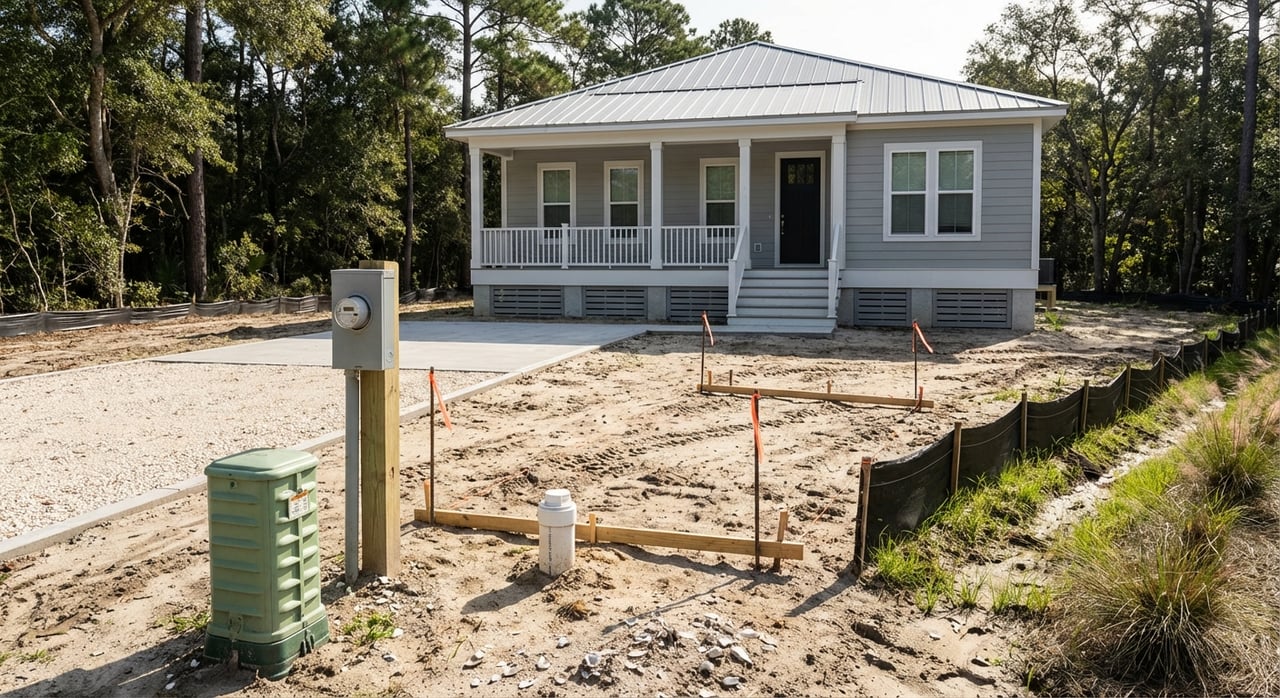
Buying Land Or New Construction In Longs South Carolina
February 19, 2026
February 19, 2026
Thinking about building from the ground up near Myrtle Beach, but want more space and value? Longs, South Carolina gives you room to breathe while keeping you close to the coast. Whether you plan to buy land and build or choose a new construction home, you can make smart moves with the right local info. In this guide, you’ll learn how Longs compares, what lots and zoning mean, how to handle utilities and permits, and what to budget and expect for timelines. Let’s dive in.
Longs sits inland in Horry County, so you often see lower land cost per acre, larger yards, and a quieter feel compared with closer-in beach suburbs. You still have quick access to dining, shopping, healthcare, and the shoreline. Horry County is one of the faster-growing areas in South Carolina, which supports ongoing development and services across the Grand Strand. You can review county growth data in the Census QuickFacts for Horry County.
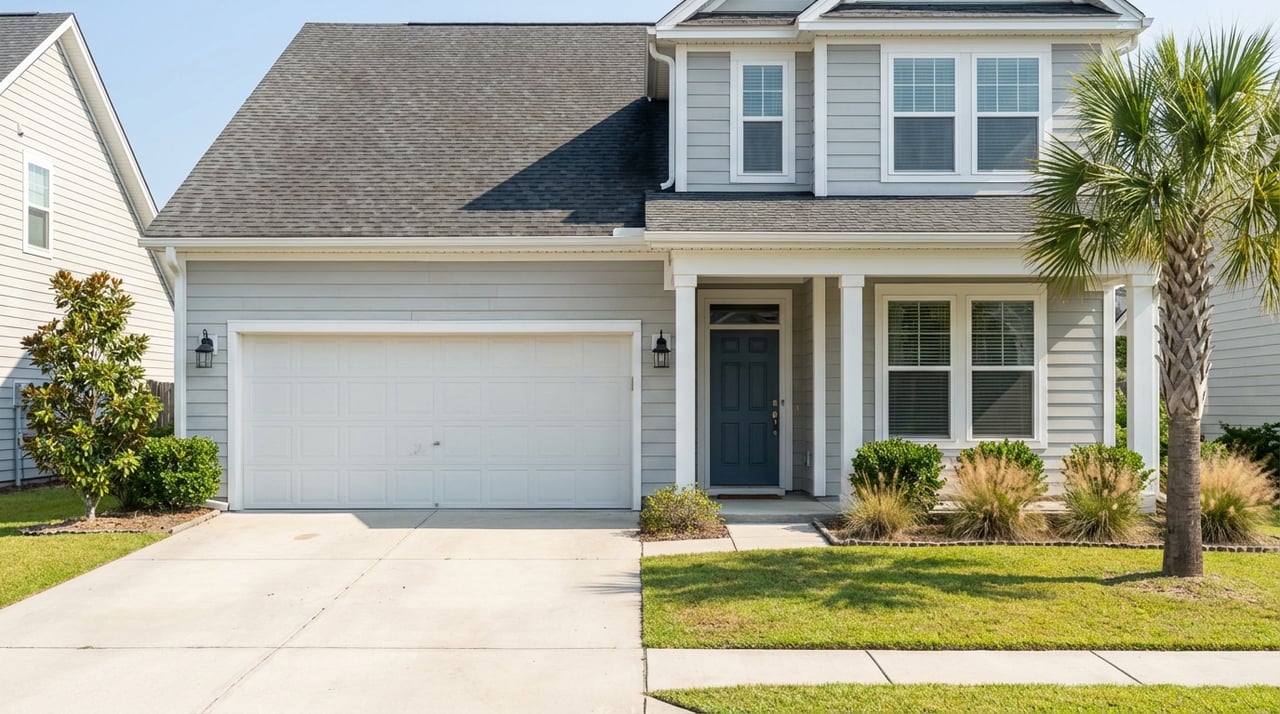
You’ll find smaller lots inside planned neighborhoods, typically about 0.15 to 0.25 acres. These often include HOA rules, community amenities, and public roads. They fit standard single-family plans from regional and national builders.
As you move farther inland, 1 to 5+ acre parcels are common. These allow more space for a custom home, workshop, boat storage, or accessory buildings, subject to zoning. Many rural parcels require a septic system and a well or rural water connection.
Investors and developers will see bigger tracts that may need a master plan, engineered roads, and formal platting. Horry County’s Land Development Regulations outline thresholds for minor versus major development and street standards.
Horry County uses single-family districts like SF6, SF7, and SF10, as well as manufactured-friendly districts like MSF6, MSF7, and MSF10. The MSF10 district allows site-built and manufactured homes and sets a minimum lot size of 10,000 square feet for single-family use. Before you offer, confirm your parcel’s district and permitted uses using the county’s Zoning Districts Summary. If your plan does not match the current zoning, speak with Planning about variances or rezoning steps.
Much of rural Longs is on Grand Strand Water and Sewer Authority (GSWSA) service as areas expand, but many parcels still require septic and possibly a well. Always verify if a parcel is in a water and sewer service area and whether public sewer is available at the road. Tap fees, capacity, and connection timelines can change your total cost. Start with GSWSA’s service guidance and call for address-specific details.
Horry Electric Cooperative and other local providers commonly serve properties outside city limits. Ask about transformer placement, any line extension fees, and service timing for a new build site.
Fiber and cable availability varies by address. Providers such as HTC, Spectrum, and Frontier serve parts of Horry County. Check address-level service using tools for regional providers like HTC’s coverage resources.
If sewer is not available, you will need a septic permit and a licensed installer. South Carolina’s onsite wastewater rules require site evaluation, soils testing, and permits before construction. Review the state framework in this DHEC summary of onsite wastewater regulations.
Many inland parcels in Longs sit outside the coastal flood zone, but flood risk is parcel-specific. Always check FEMA flood maps and Horry County GIS for the exact lot. If a parcel falls in a Special Flood Hazard Area, your lender may require flood insurance and the home plan may need elevation or engineered fill. Use the county’s FEMA Flood Maps portal to pull a FIRMette and request an elevation certificate when needed.
If you plan to split land or build multiple homes, review the county’s thresholds for minor versus major development in the Land Development Regulations. For a single home, expect to coordinate zoning confirmation, septic or DHEC approval, and the building permit. The county’s Code Enforcement division provides permit guidance, plan review, and inspections. See Horry County Code Enforcement to map your sequence and timeline.
Here are practical planning inputs many Longs buyers use:
You will see a mix of product types near Longs, from national builders with move-in-ready plans to semi-custom models and local custom builders on private lots. Options include:
Regional and national builders, including D.R. Horton and Lennar, are active in the Myrtle Beach and Longs corridor. For community-by-community activity and updates, you can review local new-home reporting like Myrtle New Homes’ community news and then confirm timelines and pricing directly with each builder.
Pros of Longs: larger yards, generally lower land cost per acre, and more flexibility for accessory buildings or custom plans. You stay within a short drive of beaches and services.
Tradeoffs to plan for: some parcels require septic and a well, certain areas use private roads, and utility extensions or site prep can add cost. Established suburbs with municipal sewer may reduce those variables, but often at higher land and home prices. For water and sewer availability questions, start with GSWSA’s guidance.
Use this quick process before you commit to a lot or new build:
Ready to explore land or a new home in Longs? You do not have to navigate zoning, utilities, and permits alone. Connect with The Klas Team for local guidance, on-the-ground lot and community previews, and a clear plan from offer to closing.
Stay up to date on the latest real estate trends.

We'd love to hear from you! Whether you're buying, selling, or just exploring your options, we're here to provide answers, insights, and the support you need. Contact us and start planning your next move.